

 Riel Roussopoulos

Covid-19: Don’t think pandemic is over, Whitty warns
Unlocking too quickly would lead to a substantial surge in Covid infections, the UK’s chief medical adviser says.
Prof Chris Whitty told MPs that would be dangerous and risk lives among the many vulnerable people not yet protected by the vaccine.
“A lot of people may think this is all over. It is very easy to forget how quickly things can turn bad,” he said.
His comments come amid pressure from backbench Tories to ease lockdown more quickly, given the drop in infections.
Hospital admissions
Appearing before the Science and Technology Select Committee, Prof Whitty said: “Under all the scenarios, if we unlock very suddenly, all the modelling suggests we would get a substantial surge while a lot of people are not protected.”
It takes about three weeks to build up immunity following the first dose of the vaccine.
So only the first four priority groups – the over-70s, health and care staff and the extremely clinical vulnerable – will have developed significant protection at the moment.
Most Covid deaths have been in these groups.
But nearly half of hospital admissions have been seen in the under-70s.
And most transmission was driven by younger people, who had more social contacts, Prof Whitty said.
So the UK’s policy of focusing on older age groups meant it would be some time before the vaccine rollout would have a significant impact on the virus’s spread.
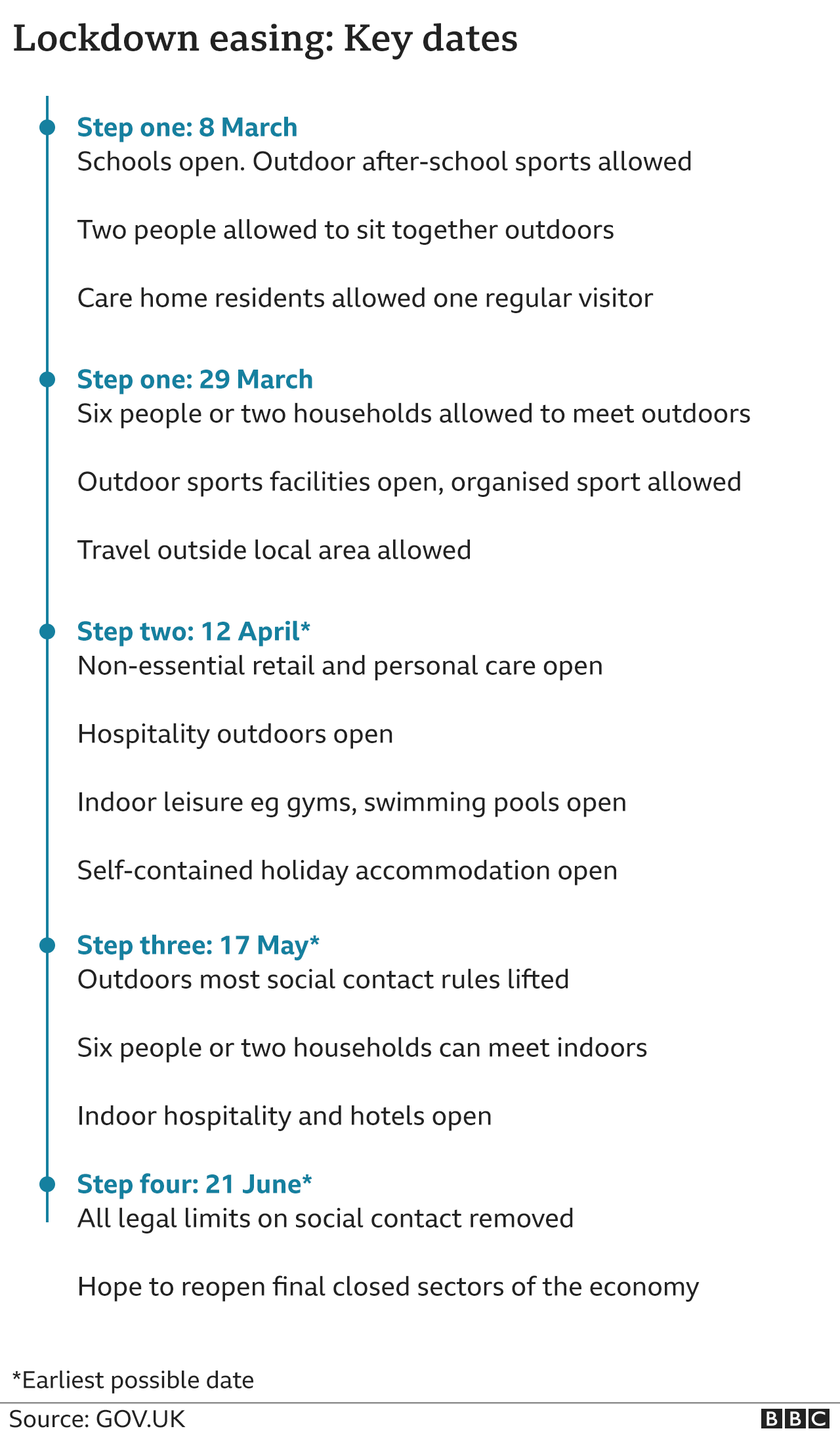

The step-by-step roadmap in England will not see all restrictions lifted until June at the earliest.
Prof Whitty said government advisers needed three to four weeks after a restriction was lifted to assess the impact.
And as the government wanted to give a week’s notice of any changes to the roadmap, a five-week gap was needed.
“If you look at the steps, each one is quite a big one,” he said.
“You want to be absolutely confident it is safe.”

- LOCKDOWN RULES: What are they and when will they end?
- SYMPTOMS: What are they and how to guard against them?
- LOOK-UP TOOL: How many cases in your area?

He also said people who thought the UK was no longer at risk should look at continental Europe, with countries seeing rates going up and having to reintroduce restrictions.
Longer term, Prof Whitty said, it was unrealistic to expect zero deaths.
Even with a gradual lifting of restrictions, modelling suggests, there could be another 30,000 deaths before the summer of 2022.
The vaccines were good, Prof Whitty said, but they were not 100% effective. People refusing vaccination would remain unprotected and the virus would “find them”.
- Why goal is to live with the virus – not fight it
It was impossible to predict exactly how many would die, Prof Whitty said.
It would be a “significant number”, though nothing like we had seen over the past year.
“The ratio of cases to deaths will go right down as a result of vaccination – but not right down to zero unfortunately,” he said.
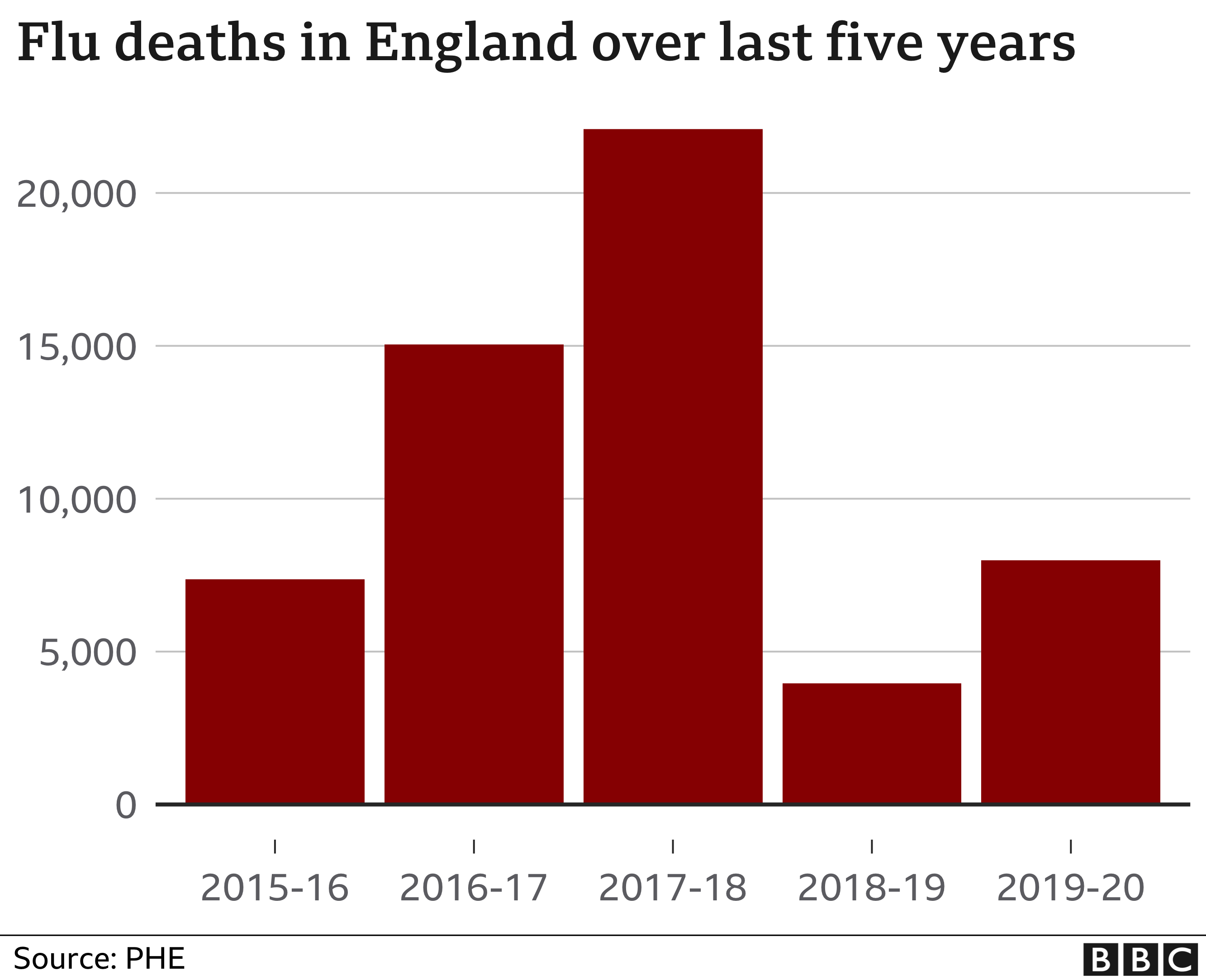
But this was already the case for flu.
In a “bad flu season”, 20,000 people could die.
And while Covid was expected to become seasonal, with future surges in the autumn and winter, he could not rule out a rise in cases in the summer.
Published at Tue, 09 Mar 2021 14:04:41 +0000


Comments
Loading…